


The Origin and Evolution of the Christmas Bauble: A Story of Tradition and Craftsmanship
Christmas History & Decoration
The Origin and Evolution of the Christmas Bauble
A story of tradition, craftsmanship, and magic surrounding one of the holiday season's most treasured symbols.
As the end-of-year festivities approach, our homes gradually fill with twinkling lights, wreaths, ribbons, and decorations that transform our interiors into a true cocoon of magic. Among all these decorations, one in particular holds a privileged place in our traditions: the Christmas bauble.
A Decoration That Became the Symbol of Christmas
Hanging from the branches of the tree, it reflects the light of the garlands, catches the eye, and helps create the warm atmosphere we love to rediscover every year. Whether red, gold, transparent, hand-painted, or hand-blown, the Christmas bauble has, over time, become one of the most iconic symbols of the holiday season.
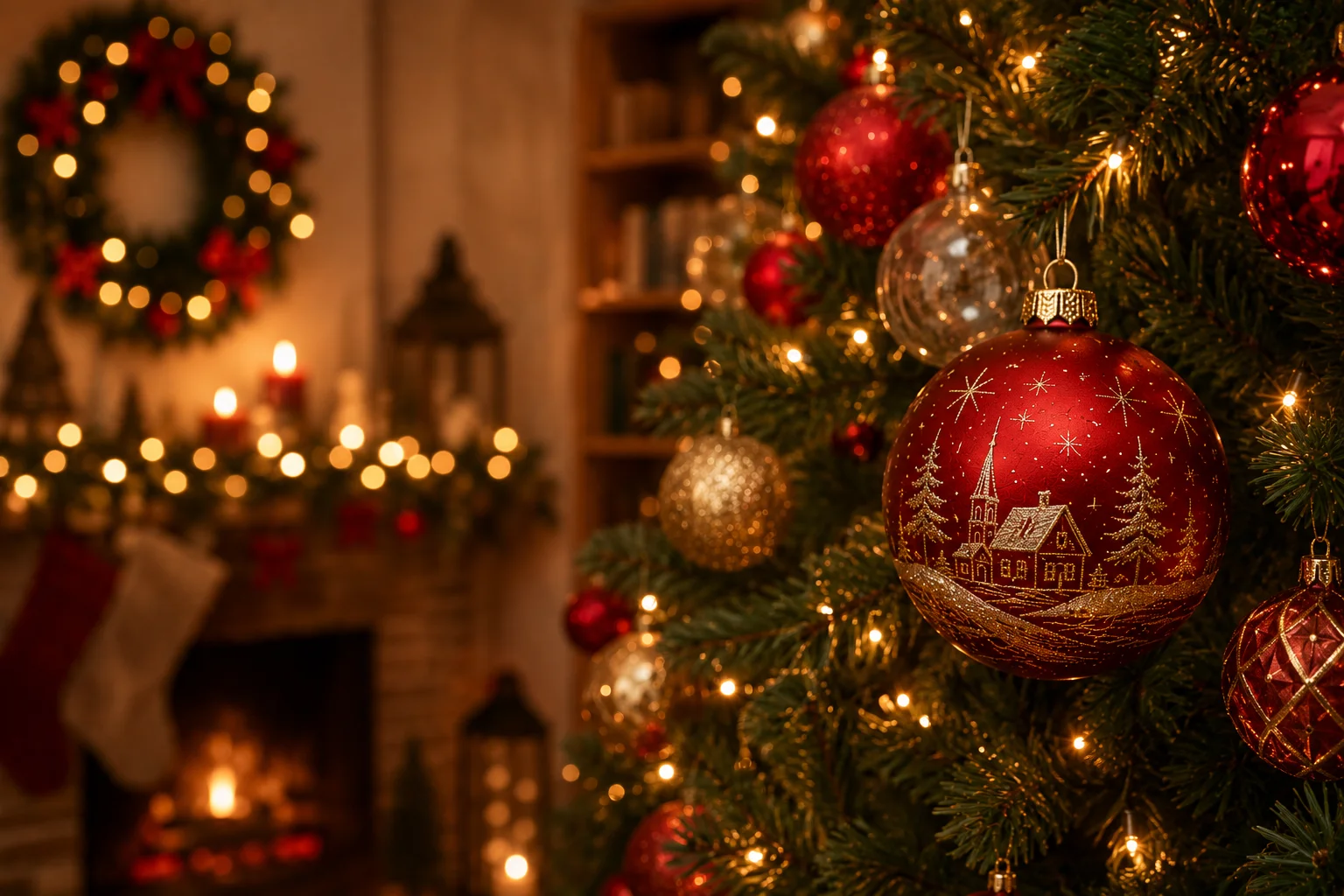
And yet, behind this object we now consider essential lies a fascinating story. Its appearance is the result of an ancient tradition, remarkable artisanal skill, and a constant evolution that has allowed it to pass through generations without ever losing its power to enchant.
Let's set off together to discover the history of the Christmas bauble, from its origins to its modern-day evolution.
The Emergence of the First Christmas Baubles
Long before the glass decorations we know today appeared, Christmas trees were adorned with natural elements.
As early as the 16th century, in several regions of Germany, families decorated their trees with red apples, walnuts, biscuits, dried fruit, and sometimes even paper flowers. Each element carried its own symbolism and played a part in the celebration of Christmas.
The apple held a particularly important place among these decorations. It represented abundance, prosperity, and also referred to certain religious traditions of the time.
For several centuries, this custom remained largely unchanged. But in the mid-19th century, an unexpected turn of events would permanently transform the history of Christmas decorations.
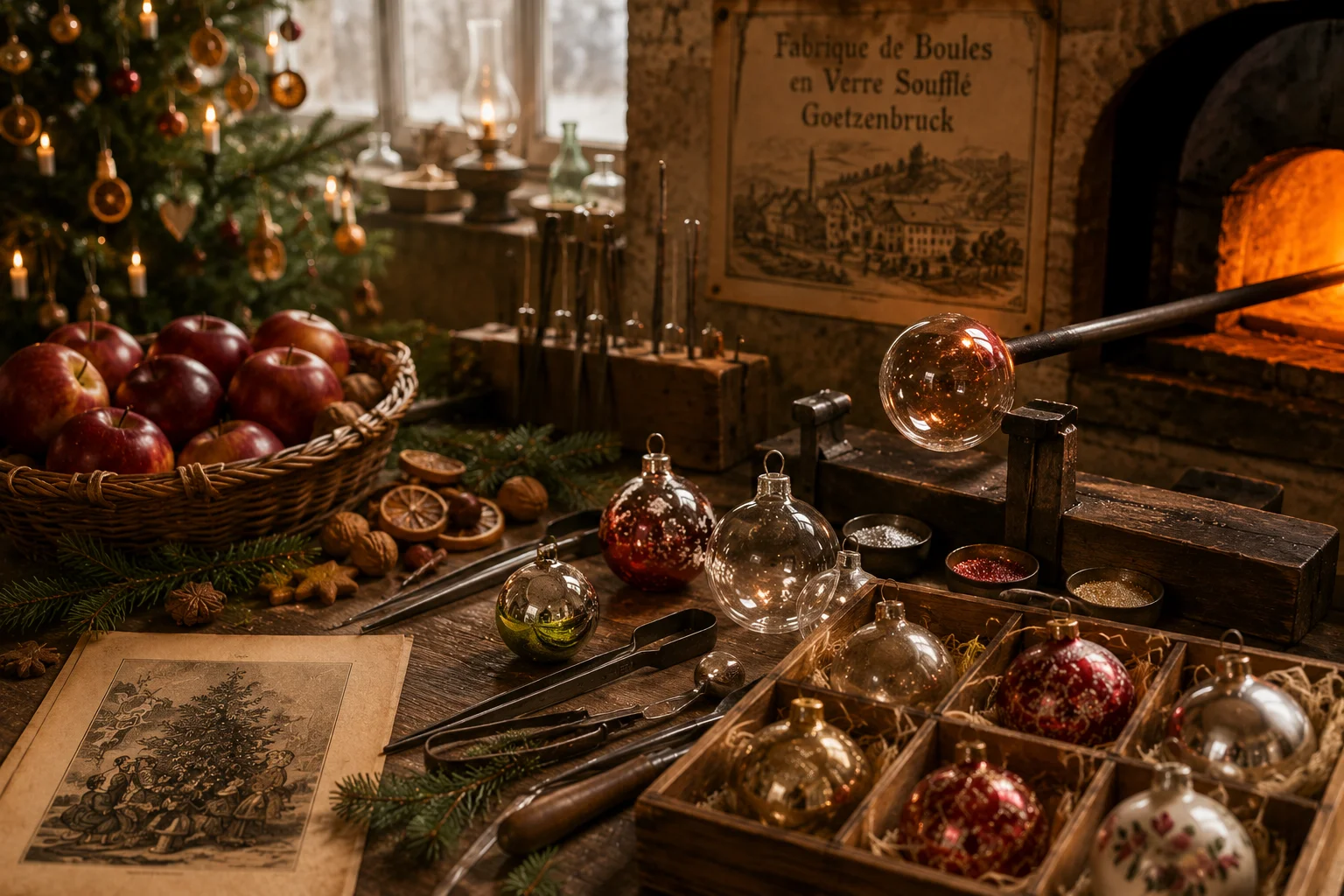
The glassmakers' workshop, amid apples, glassblowers, and baubles taking shape.
This innovation met with immediate success.
The first glass Christmas baubles captured the light of the candles then used to illuminate the trees, bringing an entirely new sparkle to the decorations. Their delicate, shimmering look quickly won over families, who saw them as an elegant alternative to traditional decorations.
At the same time, several German glassworks were also developing their own hand-blown glass Christmas ornaments. Little by little, techniques improved and shapes diversified.
Each bauble was mouth-blown by a craftsman, silvered on the inside to create a mirror-like effect, then hand-decorated with remarkable care. Some featured floral patterns, others glitter or gilded details that reflected the light beautifully.
These creations were considered true treasures at the time. In many families, they were carefully packed away after the holidays and brought out again each year with the same sense of wonder.
The Growing Popularity of Christmas Baubles Across Europe
Given their success, hand-blown glass Christmas baubles soon spread beyond the borders of Germany and Lorraine.
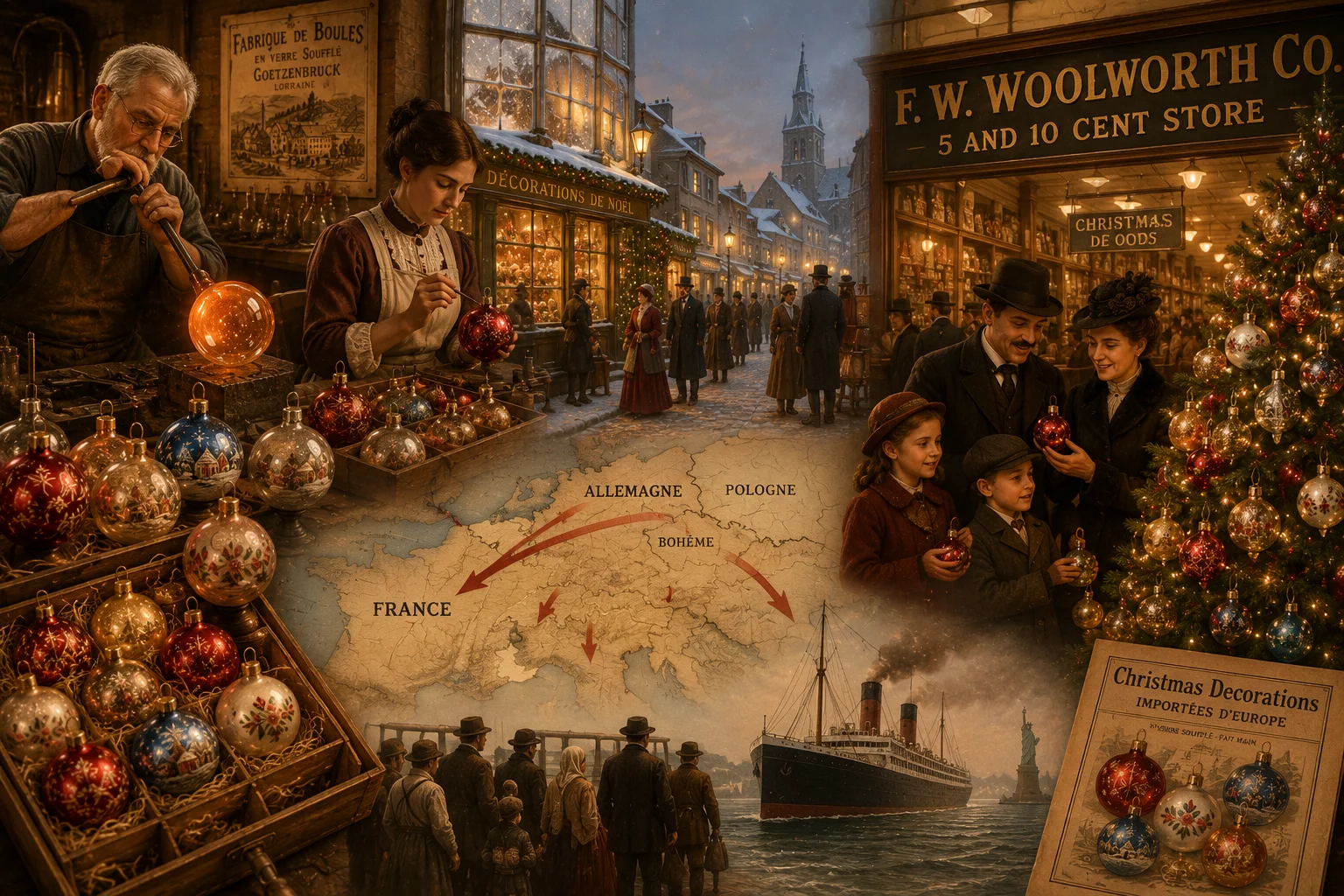
By the end of the 19th century, glassworks in Bohemia, France, Poland, and other European regions began producing their own Christmas decorations. Each country brought its own style, colours, and manufacturing techniques.
Craftsmen competed in creativity to offer ever more refined designs. Some baubles were hand-painted, others covered in glitter, beads, or metallic details. The decorations grew increasingly elaborate, turning Christmas trees into true works of art.
In European households, owning beautiful Christmas baubles was often seen as a mark of refinement. Decorations were bought with care and passed down from generation to generation.
At the start of the 20th century, this tradition crossed the Atlantic thanks to the many European immigrants who settled in the United States. They brought their customs and decorations with them, helping introduce Christmas baubles beyond Europe.
The famous Woolworth chain played a major role in popularising them by importing large quantities of glass decorations. Thanks to more affordable prices, Christmas baubles quickly found their place in American homes.
Their success was such that they soon became an essential part of Christmas celebrations across much of the Western world.
The Evolution of Materials and Designs
While the first Christmas baubles were made exclusively from hand-blown glass, the following decades saw numerous innovations emerge.
Industrialisation made it possible to produce decorations in greater quantities and at a lower cost. New materials were gradually introduced, including plastic, papier-mâché, metal, and certain lightweight resins.
This diversification made Christmas decorations more accessible to a greater number of families. But the evolution wasn't limited to materials.
Styles, too, changed with the trends and eras. The very classic decorations of the early 20th century gradually gave way to bolder designs. The 1920s and 1930s were marked by vivid colours, abundant glitter, and details inspired by the Art Deco movement.
In the 1950s and 1960s, decorations reflected post-war optimism with bright colours, original shapes, and ever-shinier finishes.
Manufacturers also began offering a wider variety of shapes: stars, bells, birds, miniature houses, figurines, and characters inspired by Christmas tales.
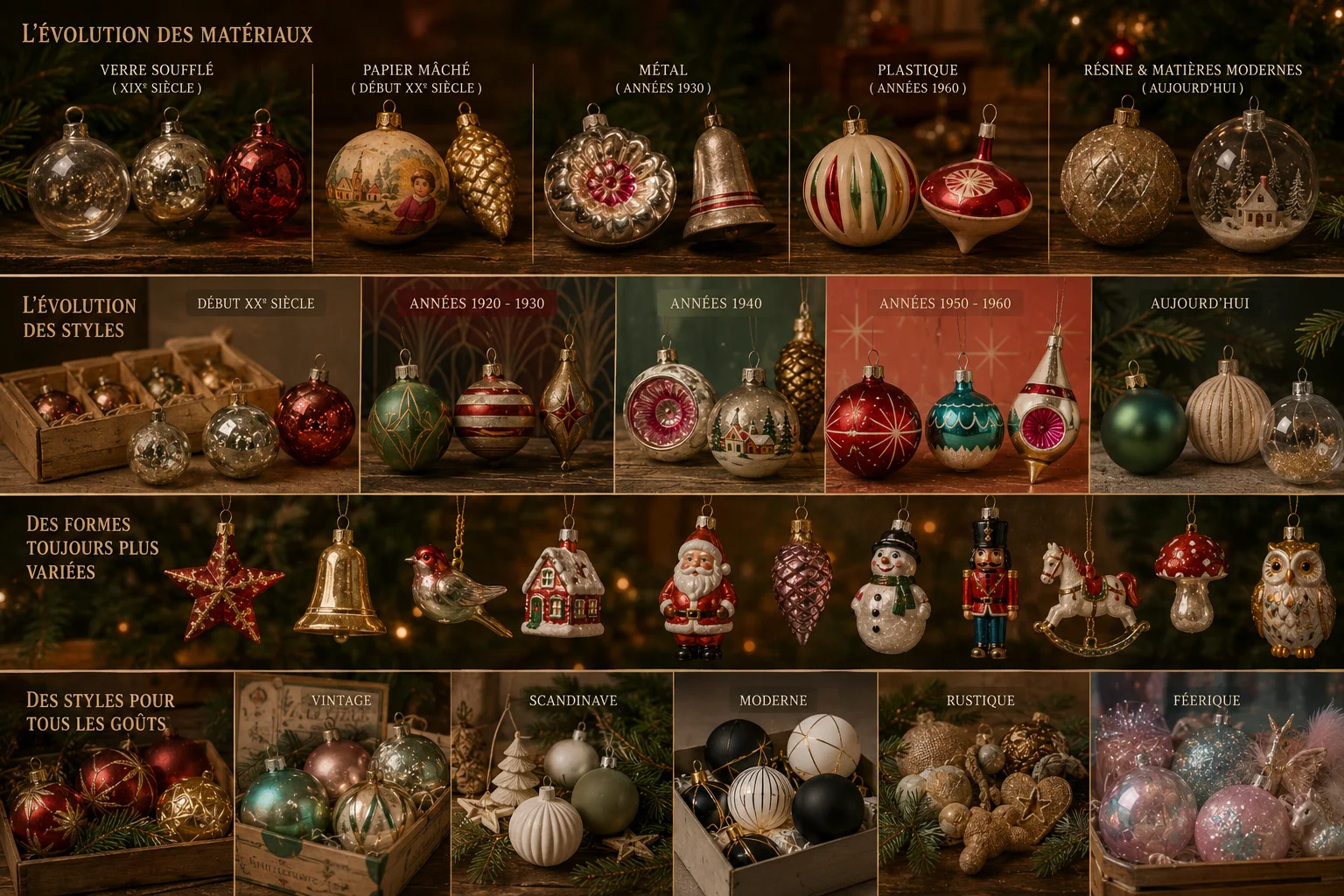
From 19th-century hand-blown glass to today's resin creations.
Over the decades, the Christmas bauble became a true canvas for creative expression.
Today, the possibilities seem endless. Decorations now come in every style: traditional, vintage, Scandinavian, modern, rustic, or whimsical. Everyone can create a tree that reflects their personality and memories.
The Christmas Bauble as a Collector's Item
Beyond its decorative role, the Christmas bauble has, over time, become a genuine collector's item.
Many enthusiasts now devote a significant amount of time to searching for antique, rare, or particularly original pieces. Some collections number in the hundreds, even thousands of decorations.
Vintage Christmas baubles hold a very special place in collectors' hearts.
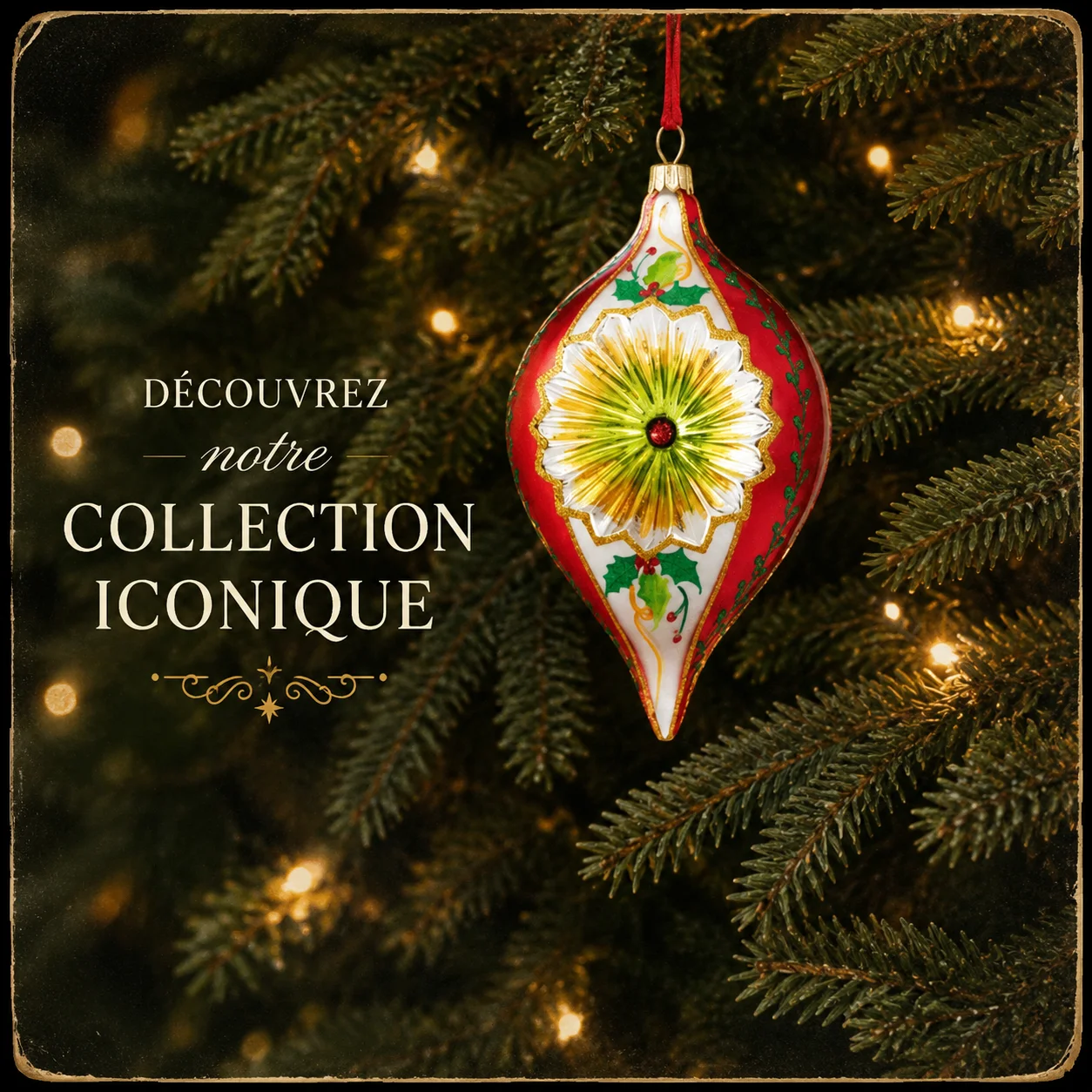
Pieces made between the 1920s and 1960s are especially sought after for the finesse of their craftsmanship and their authentic character. Hand-painted, hand-blown glass pieces bear witness to an artisanal skill that has become rare.
Every bauble tells a story, a memory, a family tradition, or a Christmas held dear.
Beyond their financial value, these decorations carry strong emotional value.
Every bauble tells a story. Some recall a trip, others a Christmas spent with family or a childhood memory. It's not uncommon for decorations to be passed down through several generations, becoming true family treasures.
This emotional dimension largely explains why Christmas baubles continue to fascinate so many people.
Even today, many enthusiasts seek out unique artisanal creations rather than mass-produced decorations. They value the handwork, the authenticity, and the history each piece carries within it.
The Future of the Christmas Bauble
Despite technological advances and new decorating trends, the Christmas bauble still seems to have a bright future ahead.
Manufacturers are constantly innovating to meet the expectations of modern consumers. New technologies now make it possible to create decorations that are lit, interactive, or personalised.
Some baubles now incorporate LED lighting, while others can be engraved with a name, a date, or a special message. The possibilities for personalisation have never been so wide-ranging.
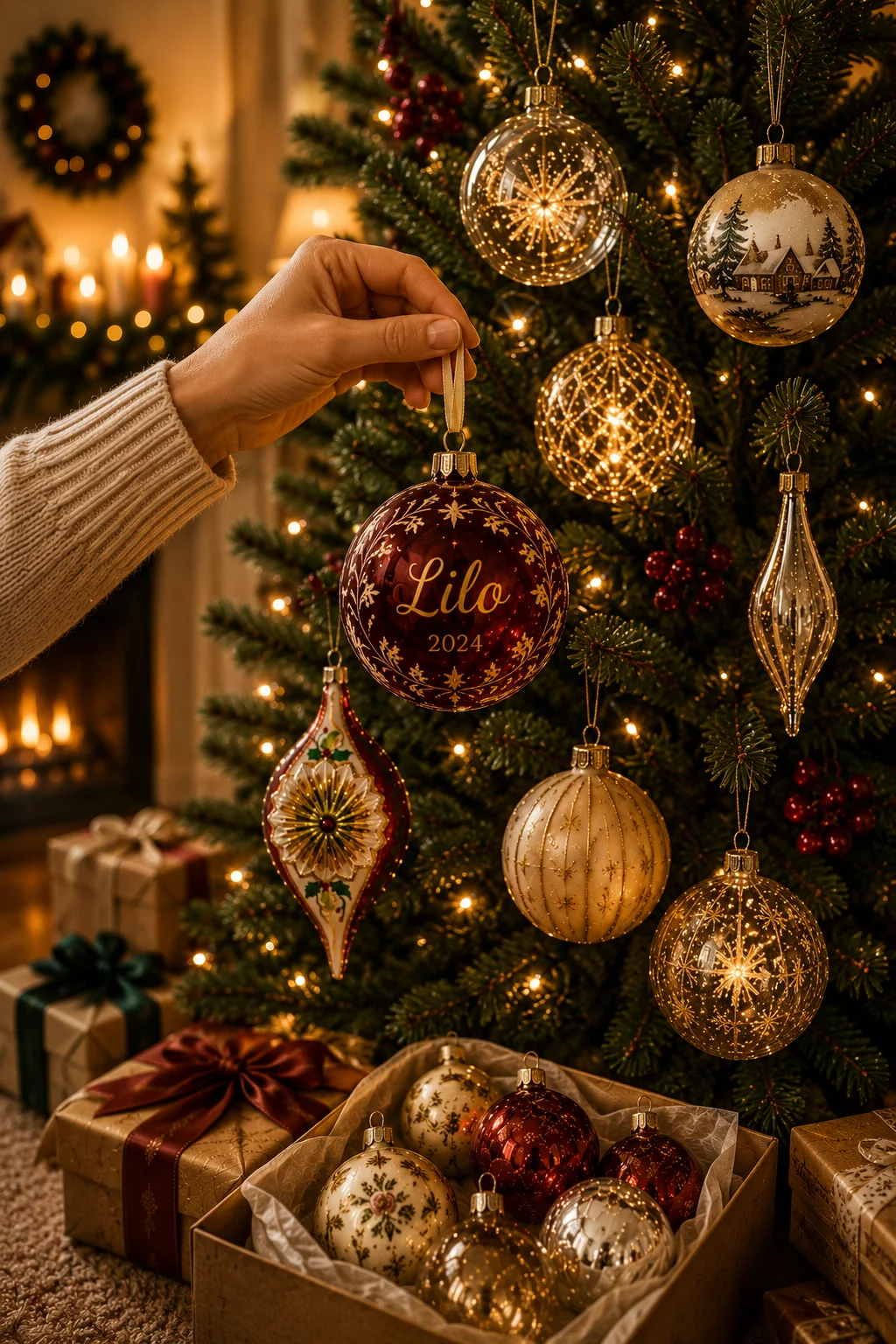
Personalisation, a new way to create a truly unique keepsake.
At the same time, environmental concerns are also shaping the Christmas decoration market.
More and more consumers now favour durable, reusable decorations made from quality materials. This trend is fuelling a return to artisanal creations and hand-blown glass decorations, designed to last for years rather than be replaced each season.
Far from disappearing, the Christmas bauble seems to be returning to its origins: a treasured object that is kept, passed down, and brought out again each year with the same delight.
Why the Christmas Bauble Continues to Enchant Us
If the Christmas bauble has endured for centuries without losing its popularity, it is undoubtedly because it represents far more than a simple decoration.
It evokes childhood memories, family traditions, moments shared around the tree, and that particular magic that comes with the holiday season.
When we decorate our tree, we are not simply hanging ornaments on its branches. We are telling a story. We revisit memories, we carry on traditions, and we create new moments that will remain etched in our memories.
From the first apples hung on trees to today's delicate hand-blown glass creations, the Christmas bauble has accompanied the evolution of our celebrations while keeping what has made it so charming for over one hundred and fifty years: its ability to spark wonder.
And that is probably why, year after year, we continue to open our decoration boxes with emotion, rediscover our favourite baubles, and carefully hang them on the tree.
Because, at its heart, every Christmas bauble holds a little piece of the magic of Christmas itself.
Related posts
 Conseils déco d'une belle table au style Shabby Chic pour Noël
Merveilleux souvenirs d'enfance chez bonne-maman
Le style de déco Shabby Chic, c'est quoi ?
Savez-vous d'où vient la tradition des chaussettes de Noël ?
Eggnog ou lait de poule, la boisson de Noël Américaine.
Cinq activités à faire à la période de Noël
Conseils déco d'une belle table au style Shabby Chic pour Noël
Merveilleux souvenirs d'enfance chez bonne-maman
Le style de déco Shabby Chic, c'est quoi ?
Savez-vous d'où vient la tradition des chaussettes de Noël ?
Eggnog ou lait de poule, la boisson de Noël Américaine.
Cinq activités à faire à la période de Noël
Leave a comment